I’m not SAFe-certified. However, as an Agile enthusiast who has scaled engineering teams and delivered complex products, I’ve studied SAFe extensively and found it to be the most comprehensive framework for understanding how to scale effectively.
Agile methodologies work brilliantly for small teams. A single squad with a clear mission, a product owner, and a two-week sprint cadence - that’s Agile at its finest. But as organizations grow - multiple teams, multiple departments, enterprise-level complexity - the cracks start showing. How do you coordinate 10 teams working on the same product without drowning in meetings? How do you align portfolio strategy with team-level sprints without creating a waterfall in disguise? According to the 16th Annual State of Agile Report, 53% of respondents cited “organizational culture at odds with Agile values” as the top challenge to scaling.
Several frameworks address this: Scrum@Scale (S@S), LeSS (Large-Scale Scrum), Nexus, and Disciplined Agile Delivery. Among these, the Scaled Agile Framework (SAFe) stands out as the most versatile and widely adopted. But what makes it different from the alternatives?
What Is SAFe and Why Does It Stand Out?
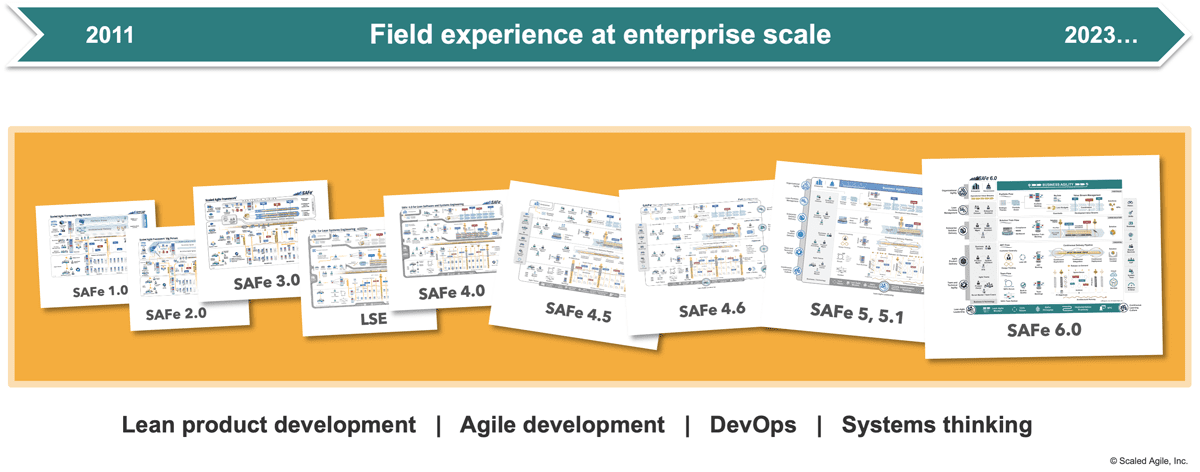
Introduced in 2011, SAFe is a comprehensive knowledge base combining Lean, Agile, and DevOps methodologies. It’s designed to scale Agile practices, not replace them. The framework is configurable - supporting everything from a few teams to hundreds of people delivering complex systems.
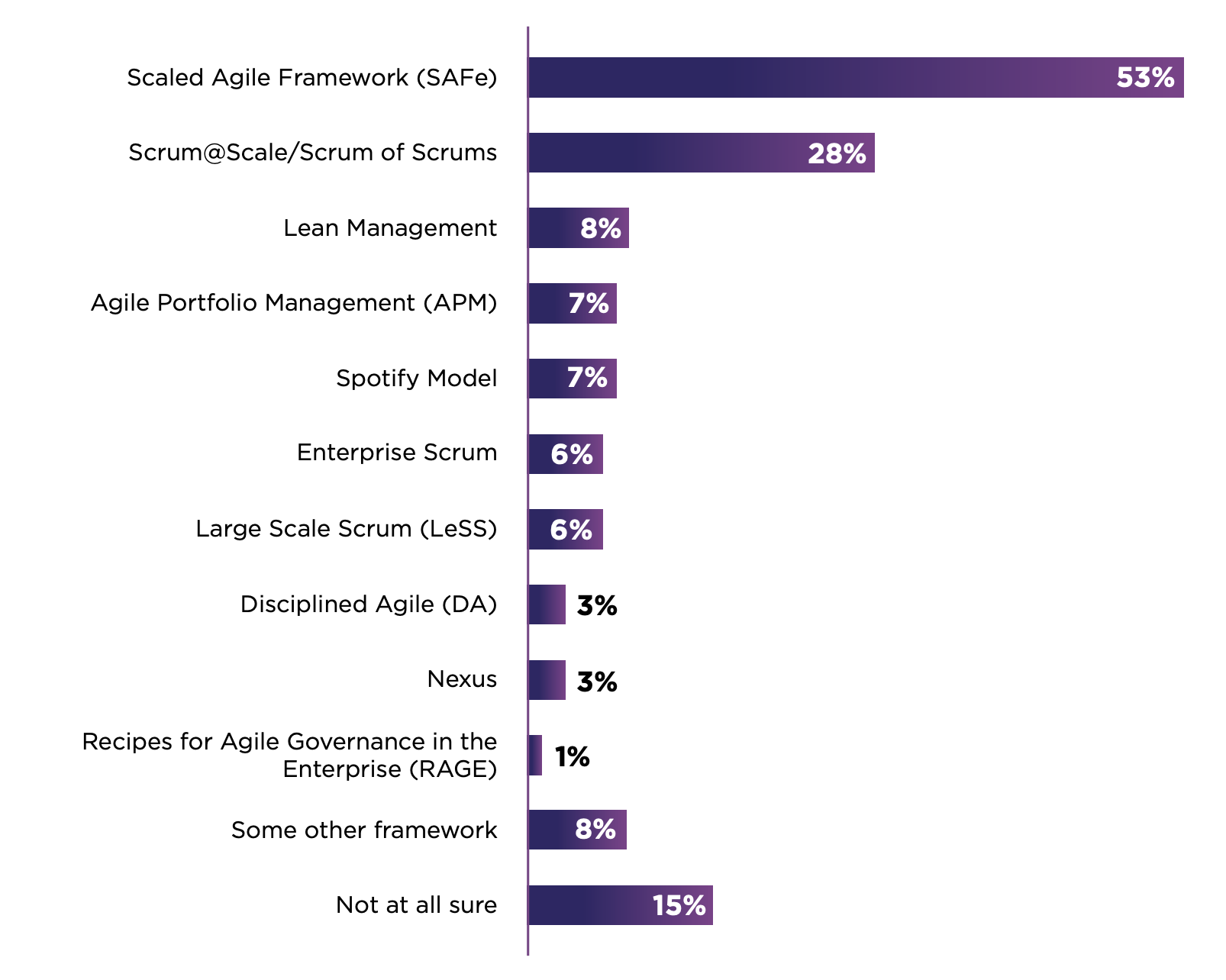
16th Annual State of Agile Report, Dec 2022
| Criteria | SAFe | Other Frameworks |
|---|---|---|
| Comprehensiveness | Full guidance from team to portfolio level | Often focused on one level |
| Flexibility | 4 configurations for different org sizes | Typically one-size-fits-all |
| Adoption | Most widely adopted scaling framework | Smaller communities |
| Training & Support | Extensive certification ecosystem | Limited resources |
| Evolution | Actively maintained (v6.0 in 2023) | Varies |
The State of Agile Report consistently shows SAFe as the most adopted scaling framework, used by 37% of respondents - more than all other scaling frameworks combined. So what does SAFe actually prescribe?
What Are the Seven Core Competencies?
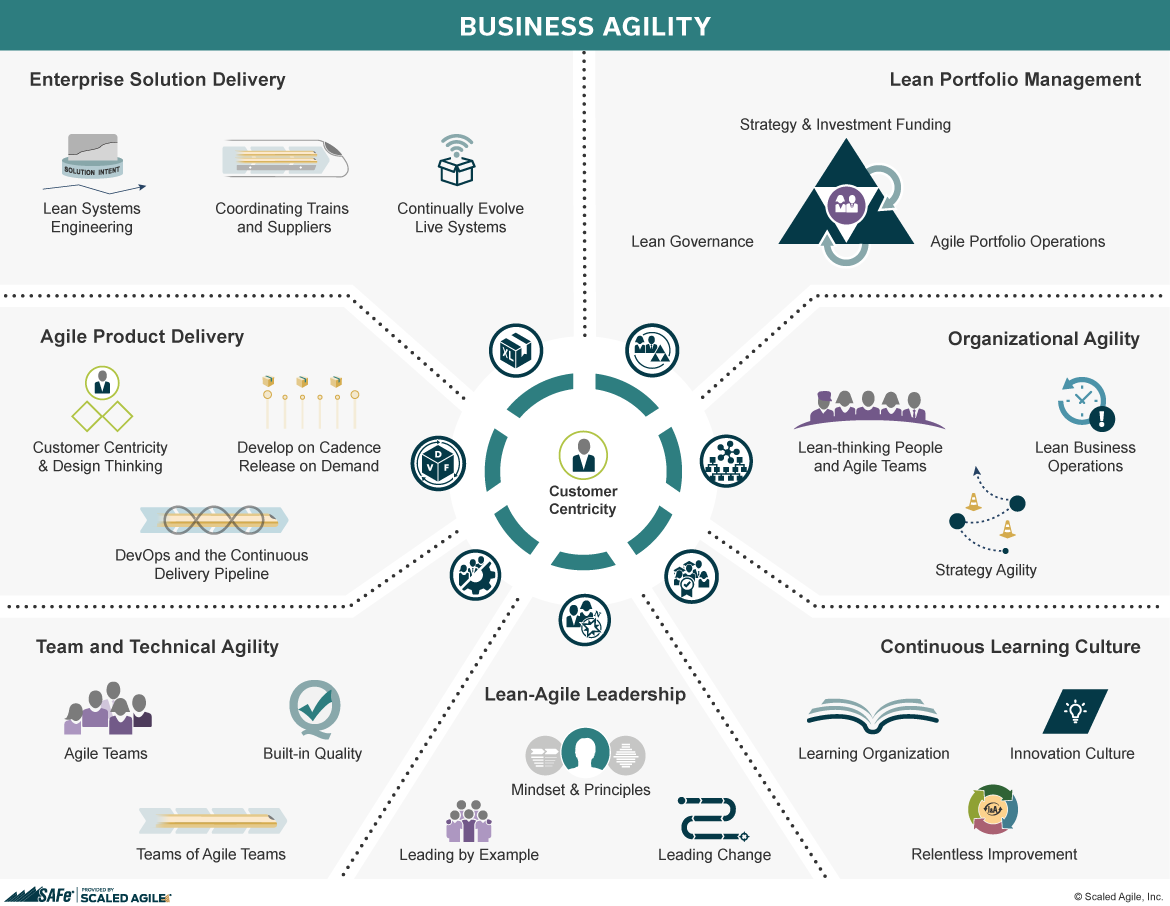
SAFe v6.0 centres on Business Agility with a customer-centric focus. Seven competencies form the foundation:
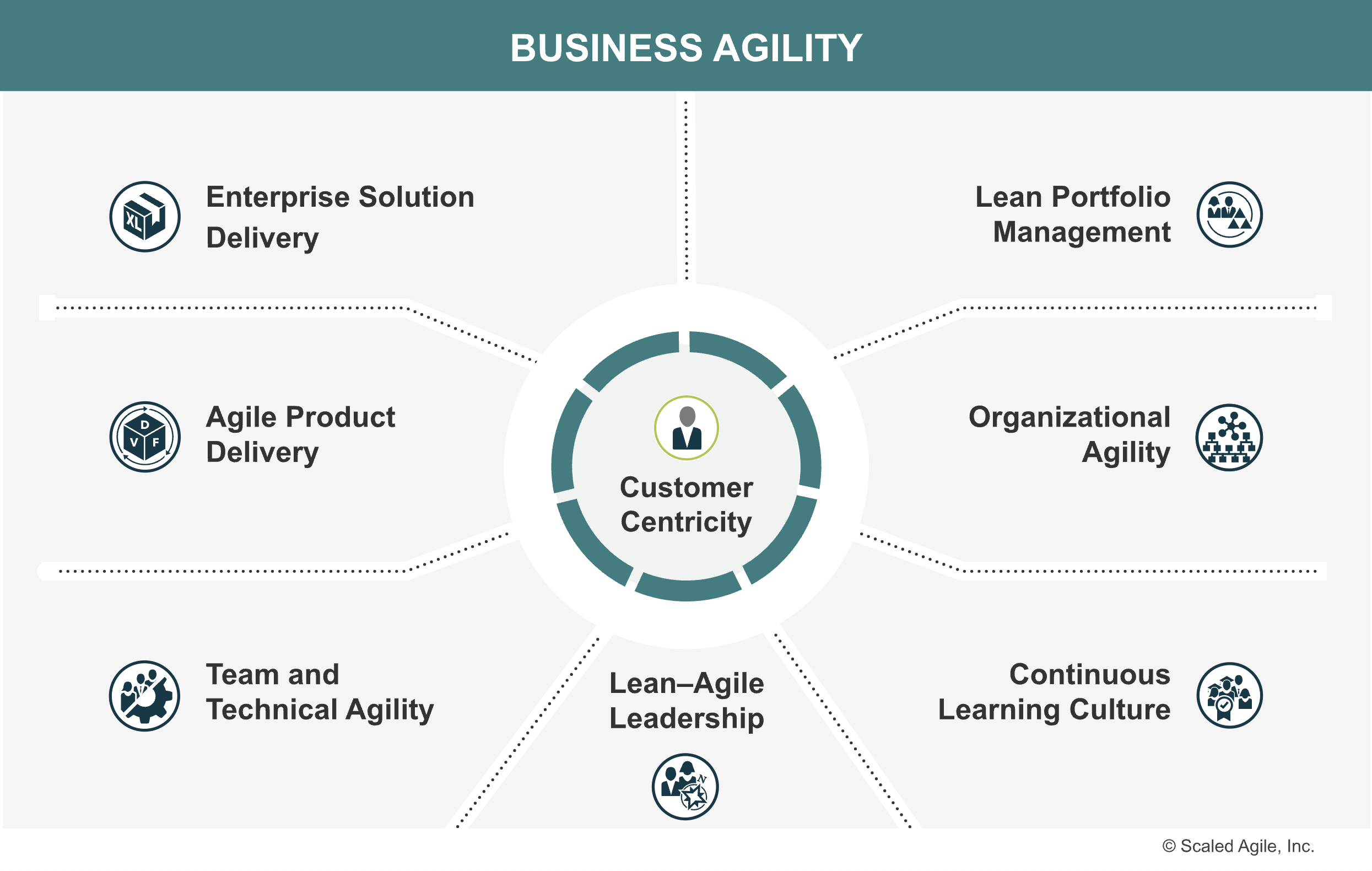
| # | Competency | What It Means |
|---|---|---|
| 1 | Team and Technical Agility | High-performing, cross-functional teams with strong engineering practices |
| 2 | Agile Product Delivery | Lean-Agile principles for prioritizing, planning, and validating based on customer feedback |
| 3 | Enterprise Solution Delivery | Coordinating multiple Agile Release Trains (ARTs) for large, complex solutions |
| 4 | Lean Portfolio Management | Aligning strategy with execution to optimize value flow |
| 5 | Organizational Agility | Building a culture of continuous learning that embraces change |
| 6 | Continuous Learning Culture | Knowledge sharing, experimentation, and learning from failures at all levels |
| 7 | Lean-Agile Leadership | Leaders who foster a Lean-Agile mindset and lead by example with empowerment and trust |
From my experience, competency #7 (Lean-Agile Leadership) is the most critical and the most frequently underestimated. Without leaders who genuinely embody these principles, the framework becomes ceremony without substance - a pattern I’ve seen play out more than once. But how does an organization choose the right level of SAFe to adopt?
Which Configuration Fits Your Organization?
SAFe provides four configurations built from four levels: Team, ART (Agile Release Train), Solution, and Portfolio.
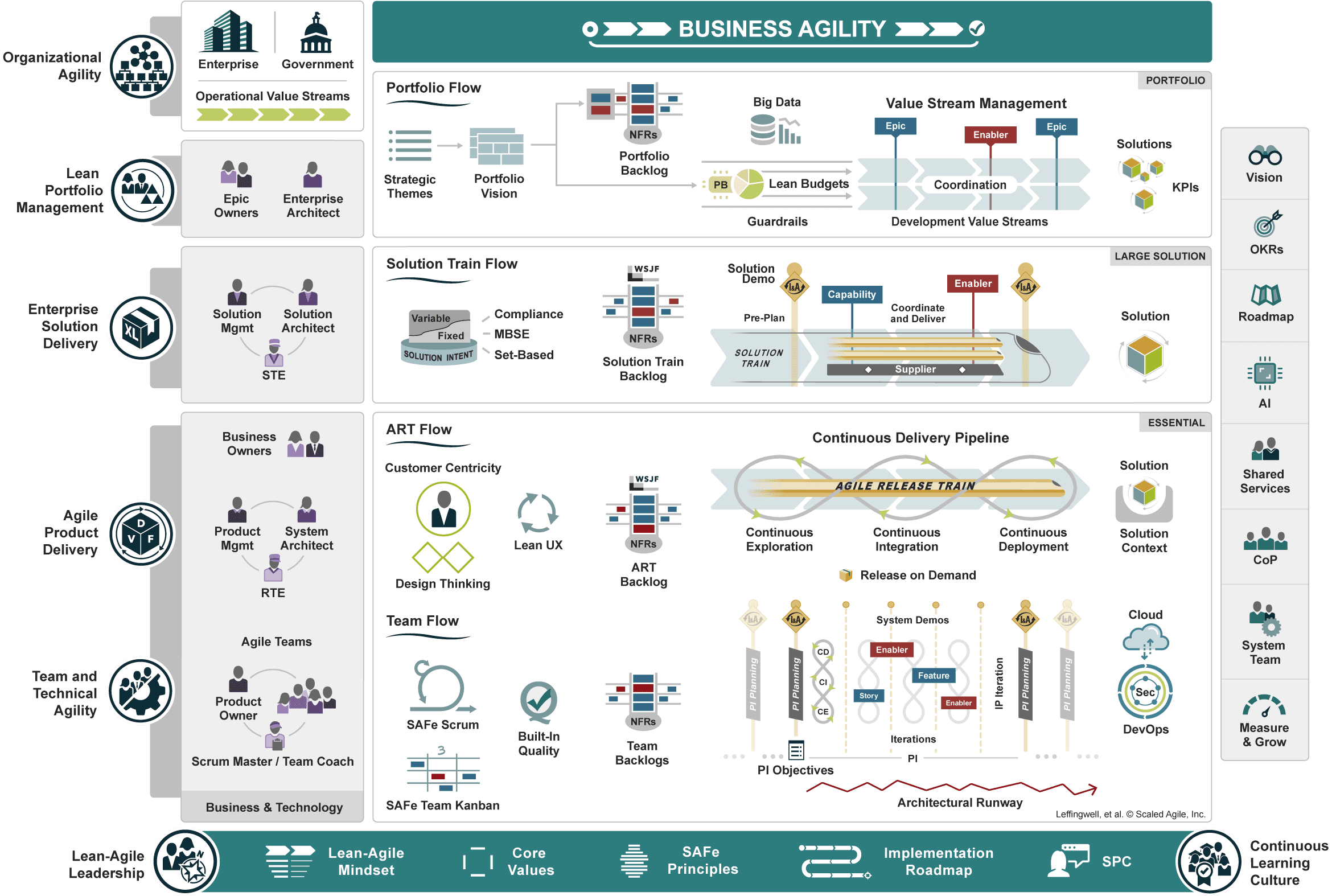
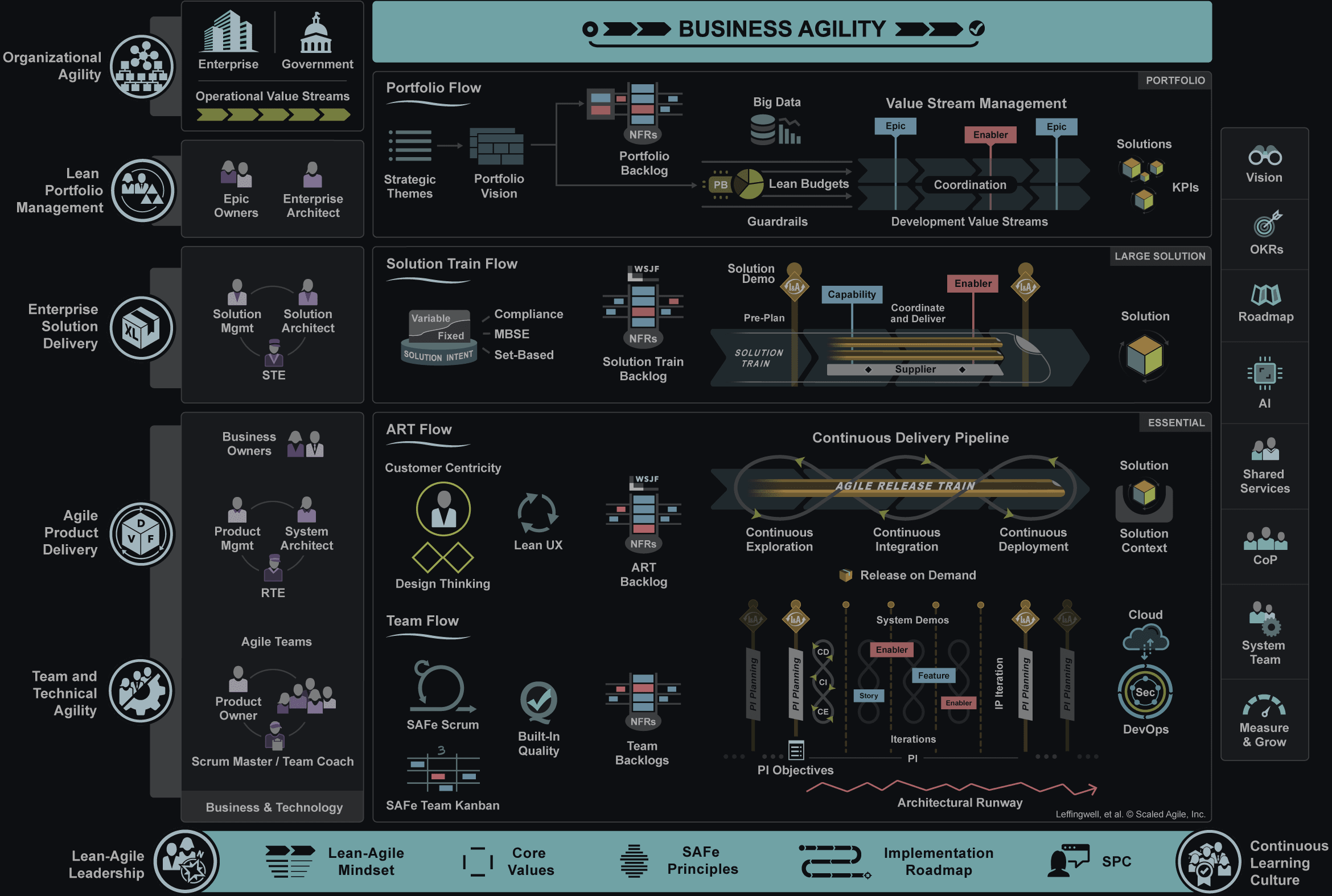
| Configuration | Levels Included | Best For |
|---|---|---|
| Essential SAFe | Team + ART | Small-to-medium organizations starting with SAFe |
| Large Solution SAFe | Team + ART + Solution | Organizations building complex, multi-ART solutions |
| Portfolio SAFe | Team + ART + Portfolio | Organizations needing strategic alignment across multiple products |
| Full SAFe | Team + ART + Solution + Portfolio | Large enterprises with complex solutions and portfolio governance |
Team and ART are mandatory in all configurations - they form the execution backbone. The most common mistake I’ve observed is organizations jumping straight to Full SAFe when Essential would have been the right starting point. More framework doesn’t mean more agility - it often means more overhead.
What Values Hold It All Together?
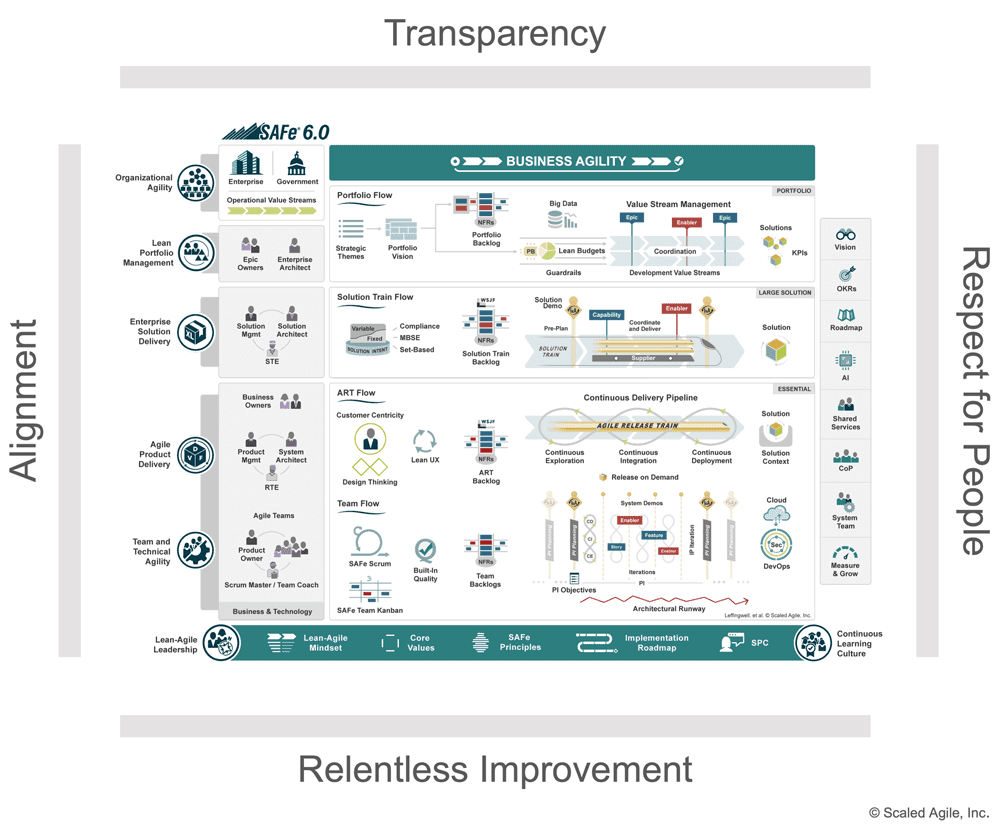
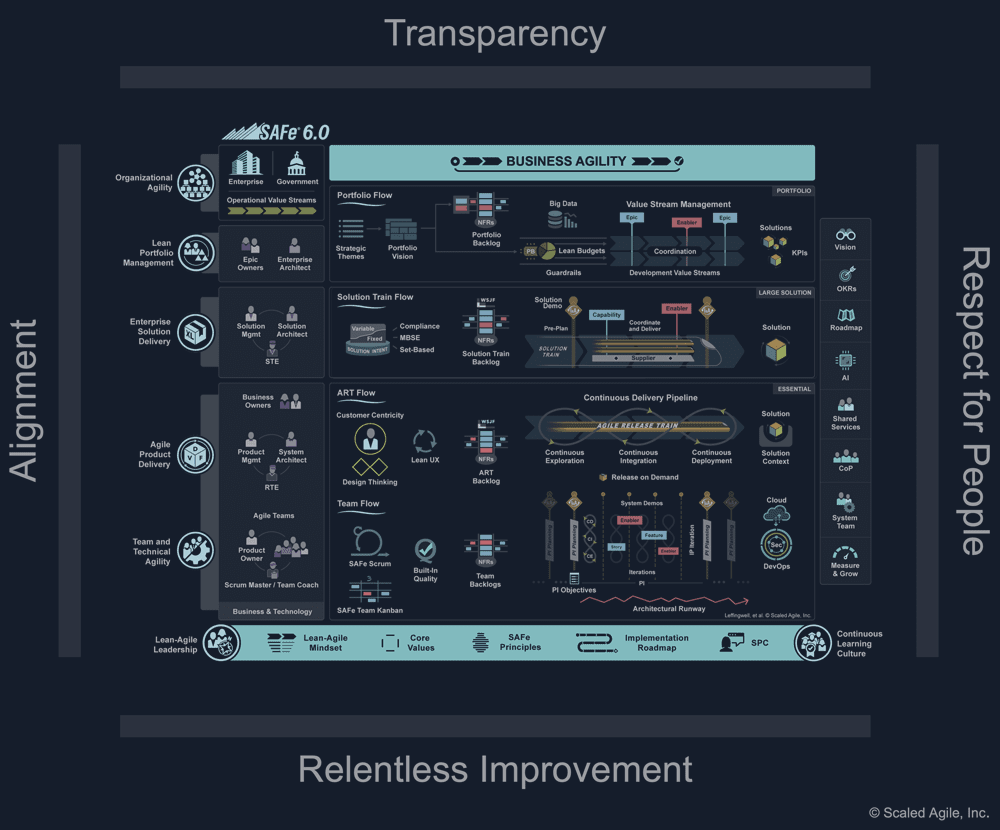
| Value | What It Means | What Breaks Without It |
|---|---|---|
| Alignment | Everyone working toward a common purpose | Wasted effort, conflicting priorities, duplicate work |
| Transparency | Open information sharing enables effective decisions | Hidden agendas, poor decisions, eroded trust |
| Respect for People | Individuals are the most important asset | Burnout, high turnover, psychological unsafety |
| Relentless Improvement | Continuous experimentation and adaptation | Stagnation, accumulating process debt, losing competitive edge |
These values resonate strongly with my own leadership philosophy. Alignment without transparency breeds distrust. Transparency without respect for people becomes surveillance. All four must work together - they’re interdependent, not optional checkboxes.
What’s My Honest Take?
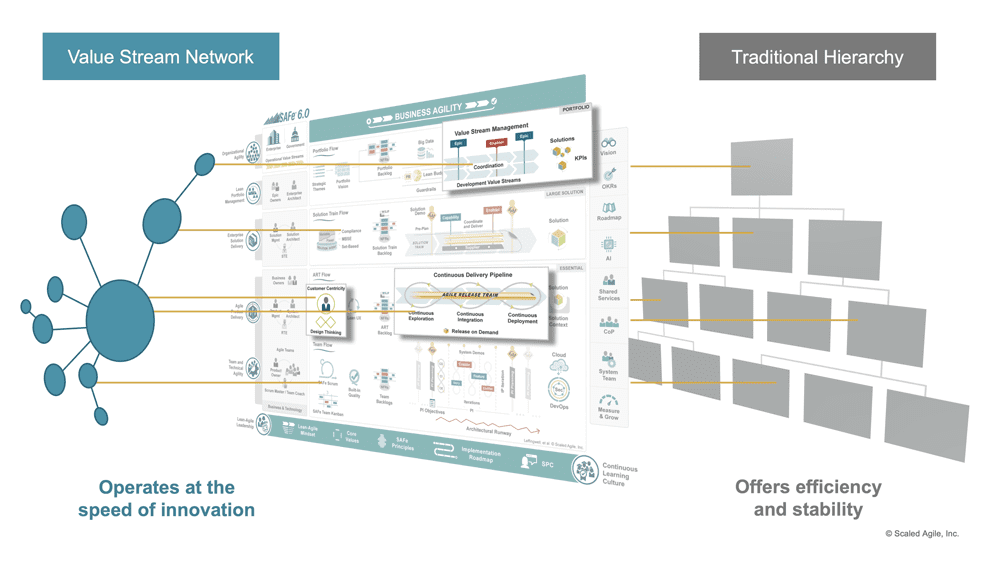
SAFe is comprehensive - arguably too comprehensive for some organizations. The risk is adopting the full framework when Essential SAFe would suffice, creating overhead that defeats the purpose of Agile. Gartner’s research notes that over-adoption of framework elements is one of the top reasons scaled Agile transformations stall.
Key Takeaways
- Start with Essential SAFe. Get the Team and ART levels working well before adding complexity.
- Leadership makes or breaks it. Competency #7 (Lean-Agile Leadership) is the most critical and most underestimated factor.
- More framework isn’t more agile. Only add Solution or Portfolio layers when genuine organizational complexity demands it.
- The four values are interdependent. Alignment, Transparency, Respect, and Relentless Improvement work as a system, not as individual checkboxes.
- Adapt, don’t adopt blindly. SAFe is a guide, not a rulebook. Measure what matters and iterate relentlessly.
Here’s a challenge for your next planning session: map your current Agile practices to the Essential SAFe configuration. Identify the gaps - not between where you are and Full SAFe, but between where you are and Essential SAFe. The gaps in those fundamentals are where the real improvement opportunities live.
You May Also Like

The Modern Leader
There’s a pattern I’ve seen play out more than once. A team ships a big release, leadership celebrates, and within weeks the strongest engineers start disengaging. They become quieter in …
Read More: The Modern Leader
Tech Debt: From a Technical Jargon to Real-World Impacts
I recently gave a presentation at my company about tech debt - sharing knowledge, techniques, and experiences on how to manage it properly and efficiently. The response convinced me to write this up …
Read More: Tech Debt: From a Technical Jargon to Real-World Impacts