I’ve been running Stable Diffusion and language models on my homelab for a few months now, and the thing that keeps striking me isn’t the output quality - although that’s improved dramatically. It’s how fast the gap between “impressive demo” and “production-ready tool” is closing. When I started, AI-generated content needed heavy editing to be usable. Now, models like Llama 2 and DreamShaper produce output that needs only light touch-ups.
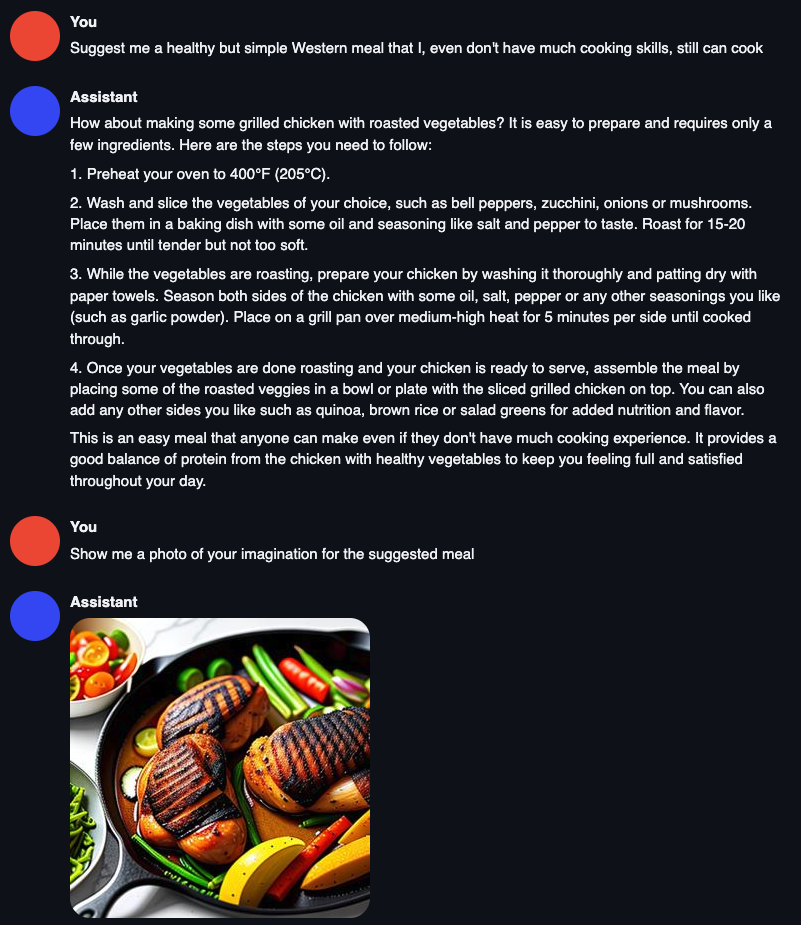
That trajectory has me thinking about something bigger: the combination of text and image generation isn’t just a productivity boost. It’s enabling entirely new categories of customer experience that simply weren’t possible before. An online grocery platform that generates personalized meal plans with appetizing visual previews. A fashion brand that creates custom product mockups based on individual preferences. These aren’t hypothetical use cases - they’re already happening.
Where Is the Real Value?
After experimenting with both text and image generative AI on my homelab and observing how businesses are adopting these tools, I see six areas delivering the most compelling ROI:
| Application | What It Does | Business Impact |
|---|---|---|
| AI-Powered Design | Generate customized web designs, patterns, illustrations | Faster iteration, personalized brand experiences |
| Automated Content | Generate articles, social posts, product descriptions at scale | 10x content velocity with consistent brand voice |
| Virtual Design Collaboration | AI creates variations from artist inputs, combining styles | Unlocks remote creative collaboration |
| Custom Product Design | Generate product mockups from user preferences | Higher engagement, new revenue from personalization |
| AI-Assisted Copywriting | Generate slogans, ad copy, email campaigns | Reduces creative bottleneck, enables A/B testing at scale |
| Personalized E-Commerce | Tailored descriptions and product images per customer | Higher conversion rates, better customer experience |
flowchart TD
    A[Generative AI] --> B[Text Generation]
    A --> C[Image Generation]
    B --> D[Content Automation]
    B --> E[Copywriting]
    B --> F[Personalization]
    C --> G[Design Generation]
    C --> H[Product Mockups]
    C --> I[Visual Collaboration]
    D & E & F & G & H & I --> J[Business Value]
A Goldman Sachs report estimates generative AI could raise global GDP by 7% (nearly $7 trillion) and boost productivity growth by 1.5 percentage points over a 10-year period. Those numbers are staggering, but they only materialize if businesses move beyond experimentation. So what does actual implementation look like?
What Does the Practical Reality Look Like?
From my own experience running these models locally, here’s what I’ve learned about applying generative AI in practice:
Text generation is more immediately useful than image generation for most businesses. Generating product descriptions, email drafts, and documentation delivers measurable time savings from day one. Image generation, while impressive, requires more curation and quality control before it’s production-ready. Jasper AI reported that marketing teams using AI content tools see a 40% reduction in content production time - and that’s with current-generation models.
The quality bar is rising fast. What was 60% of human quality six months ago is now 90%+. The trajectory suggests that within a year or two, the gap between AI-generated and human-created content will be imperceptible for most use cases.
Customization is the moat. Generic AI output looks generic. The businesses that win are those that fine-tune models on their own data - their brand voice, their design language, their customer profiles. Self-hosted models make this possible without exposing proprietary data to third parties. But if the potential is so clear, what’s stopping broader adoption?
What Are the Challenges?
The technology is powerful, but adoption isn’t straightforward:
| Challenge | Why It’s Hard | Practical Mitigation |
|---|---|---|
| Talent gap | Finding people who understand both AI capabilities and the business domain | Upskill existing domain experts rather than hiring AI specialists |
| Infrastructure costs | Running models locally requires GPU investment; cloud APIs create vendor dependency | Start with cloud APIs for prototyping, migrate to self-hosted for production |
| Quality control | AI output is probabilistic, not deterministic | Build human review processes, especially for customer-facing content |
| Ethical considerations | Attribution, authenticity, and disclosure questions are largely unresolved | Establish clear disclosure policies before scaling |
| Integration complexity | Plugging AI into existing workflows (CMS, e-commerce, design tools) | Start with standalone tools, then integrate as confidence grows |
Key Takeaways
- Start with text generation - it delivers the fastest ROI with the lowest risk
- Self-host when privacy or customization matter - fine-tuning on your own data is where the competitive advantage lives
- Invest in quality control pipelines - the AI generates; humans curate and approve
- Think beyond content creation - the most transformative applications combine text and image generation for entirely new customer experiences
- Move now, iterate later - the technology evolves fast, and organizations that start experimenting today compound their advantage
One thing you can do today: pick one repetitive content task in your workflow - product descriptions, internal documentation, email templates - and run it through an AI tool. Measure the time saved and the quality gap. That single data point will tell you whether generative AI is ready for your use case, and it gives you concrete evidence to bring to the team.
You May Also Like


The Modern Leader
There’s a pattern I’ve seen play out more than once. A team ships a big release, leadership celebrates, and within weeks the strongest engineers start disengaging. They become quieter in …
Read More: The Modern Leader

Tech Debt: From a Technical Jargon to Real-World Impacts
I recently gave a presentation at my company about tech debt - sharing knowledge, techniques, and experiences on how to manage it properly and efficiently. The response convinced me to write this up …
Read More: Tech Debt: From a Technical Jargon to Real-World Impacts