March 31, 2024
Table of Contents
Beyond the Single Assistant
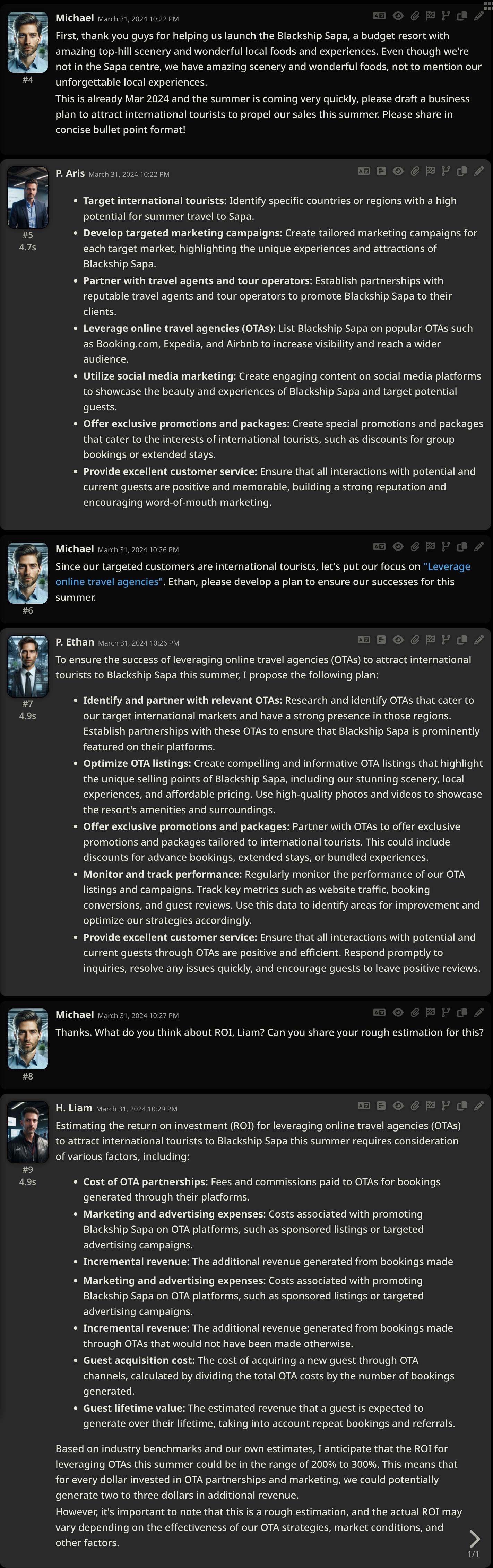
Most AI assistants today function as standalone, generalized models - one brain trying to handle everything from marketing strategy to financial analysis to code review. While their breadth is impressive, this one-size-fits-all approach inherently limits their depth.
I run a different model. On my homelab, I operate 11 specialist AI agents, each with a distinct scope, orchestrated through a single interface. The results have fundamentally changed how I think about AI capability.
flowchart TD
    A[Orchestrator Agent] --> B[Engineer]
    A --> C[Researcher]
    A --> D[Architect]
    A --> E[Product Manager]
    A --> F[Analyst]
    A --> G[Executive Coach]
    A --> H[Writer]
    A --> I[Assistant]
    A --> J[Wellness]
    A --> K[Family]
Specialization in Action
To illustrate, consider a real scenario. I ask my orchestrator: “Evaluate whether to migrate my homelab monitoring from NewRelic to Grafana Cloud.”
Here is what happens:
| Agent | Role | Contribution |
|---|---|---|
| Researcher | Finds what exists | Compares feature sets, community support, pricing tiers |
| Architect | Designs the system | Proposes migration architecture, identifies integration points |
| Analyst | Processes the data | Calculates TCO comparison, estimates migration effort |
| Engineer | Builds it | Drafts the Terraform config and Grafana dashboards |
Each agent brings a different lens. The researcher does not try to architect; the architect does not try to calculate ROI. They contribute their piece, and the orchestrator synthesizes. The result is a multi-layered analysis that no single AI - no matter how capable - could produce in one pass.
Why Teams Beat Individuals
Just as human teams comprising experts from diverse backgrounds tackle complex challenges more effectively, AI agent teams combine unique strengths:
- Corporate Strategy: Marketing, operations, finance, and domain experts co-create robust strategic plans with holistic assessment
- Technical Architecture: Research, design, implementation, and review happen in parallel with clear separation of concerns
- Content Creation: Ideation, research, writing, and editing as distinct stages - each handled by the right specialist
- Decision Making: Multiple perspectives surface trade-offs that a single model would miss
The key insight: the path forward is not pursuing an omnipotent, one-size-fits-all AI. It is fostering ecosystems of specialized agents that collaborate, challenge each other’s assumptions, and produce solutions transcending what any individual could develop alone.
The Technical Challenges
Coordinating AI teams introduces real engineering problems:
| Challenge | Description | Current State |
|---|---|---|
| Knowledge Integration | Agents must share and build on each other’s outputs across domains | Solved via shared memory and context passing |
| Dynamic Interaction | Fluid dialogue, clarifying questions, conversational control transfer | Works with agent hierarchy and delegation protocols |
| Task Decomposition | Breaking complex tasks into sub-tasks for the right specialist | Orchestrator agent handles this well |
| Domain Grounding | Each agent needs deep understanding of its specialty boundaries | System prompts and skill definitions |
| Human-AI Teaming | Humans must guide AI teams while maintaining oversight | Transparent UI showing sub-agent activity is critical |
From running this setup daily, I can confirm that the transparent agent hierarchy - seeing which sub-agents are active, what tool calls are being made - is not a nice-to-have. It is essential for trust. Without visibility into the orchestration, you cannot verify that the right specialist handled the right sub-task.
Key Takeaways
- Specialist agents outperform generalist ones on complex, multi-faceted tasks. The depth gained from focus more than compensates for the coordination overhead.
- Clear scope boundaries prevent overlap. Engineer builds from architecture; architect designs before building. Researcher finds what exists; analyst processes your data. These distinctions matter.
- The orchestrator is the most important agent. It decides when to delegate versus handle directly, which specialist fits each sub-task, and how to synthesize their outputs.
- This is the future of AI work. Not one giant model doing everything, but teams of specialized agents collaborating - mirroring how the best human teams operate.
The potential is staggering. We are at the beginning of unlocking collective AI intelligence, and the organizations that master agent collaboration will have a decisive advantage.
Share :
You May Also Like
Fun Things To Do With Self-Hosted Generative AI
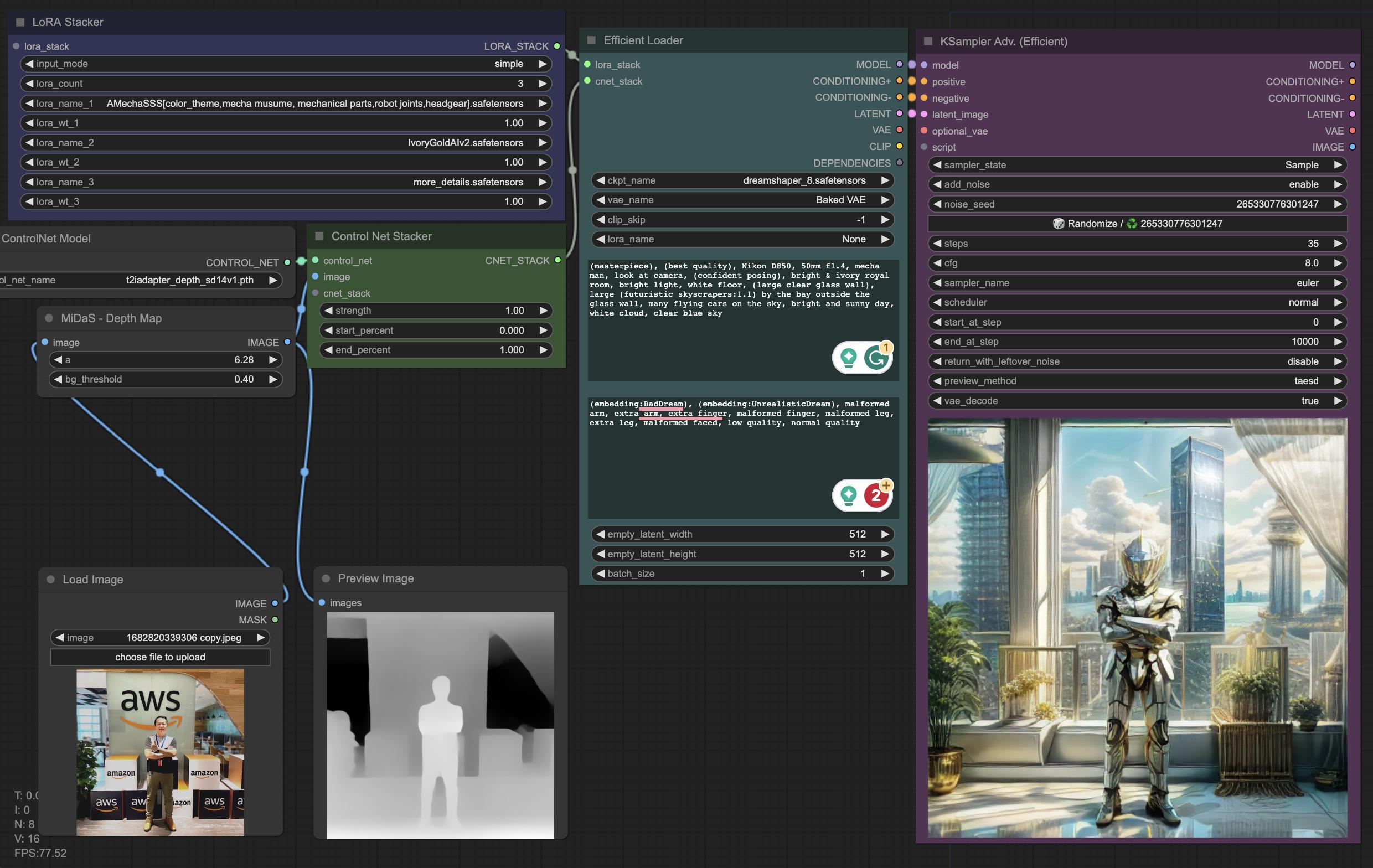
Weekend Experiments Weekends are my time to explore. My homelab runs a full generative AI stack - models, workflows, UIs - and I use that freedom to experiment with things that commercial services …
Read More
The Modern Leader
The False Dichotomy A bad manager sacrifices people for numbers. A good manager sacrifices numbers for people.
Read More