May 9, 2023
Table of Contents
The Journey Begins
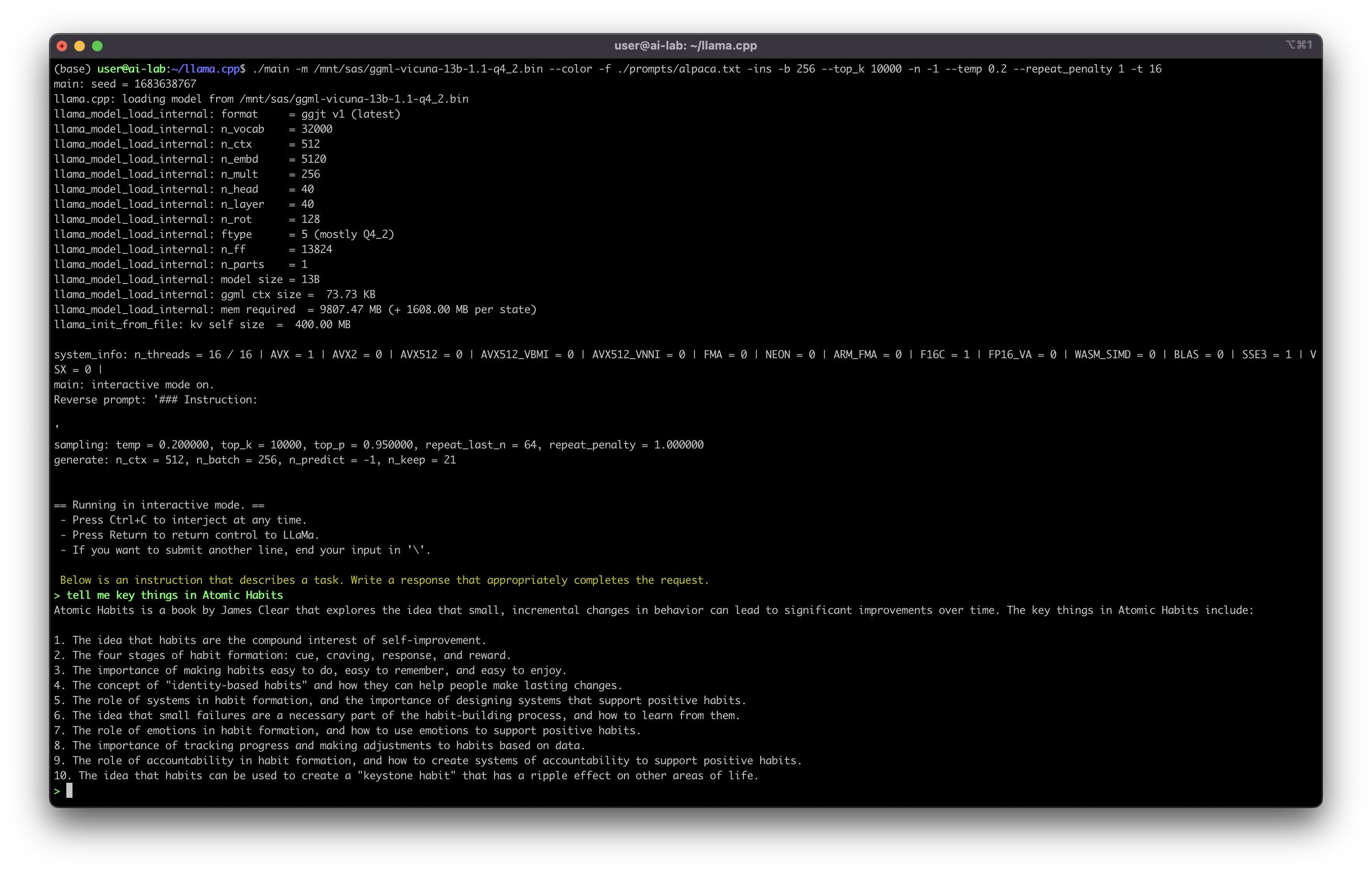
A few weeks ago, I managed to install a self-hosted version of ChatGPT on my homelab - the LLaMA model, open-sourced by Meta. I started with Alpaca-6B. The speed was acceptable, but the response quality was underwhelming.
Recently, I upgraded to Vicuna-13B, claimed to deliver 92% of ChatGPT’s quality:
This model was also mentioned in the now-famous leaked Google memo that argued open-source models were rapidly closing the gap with proprietary ones:
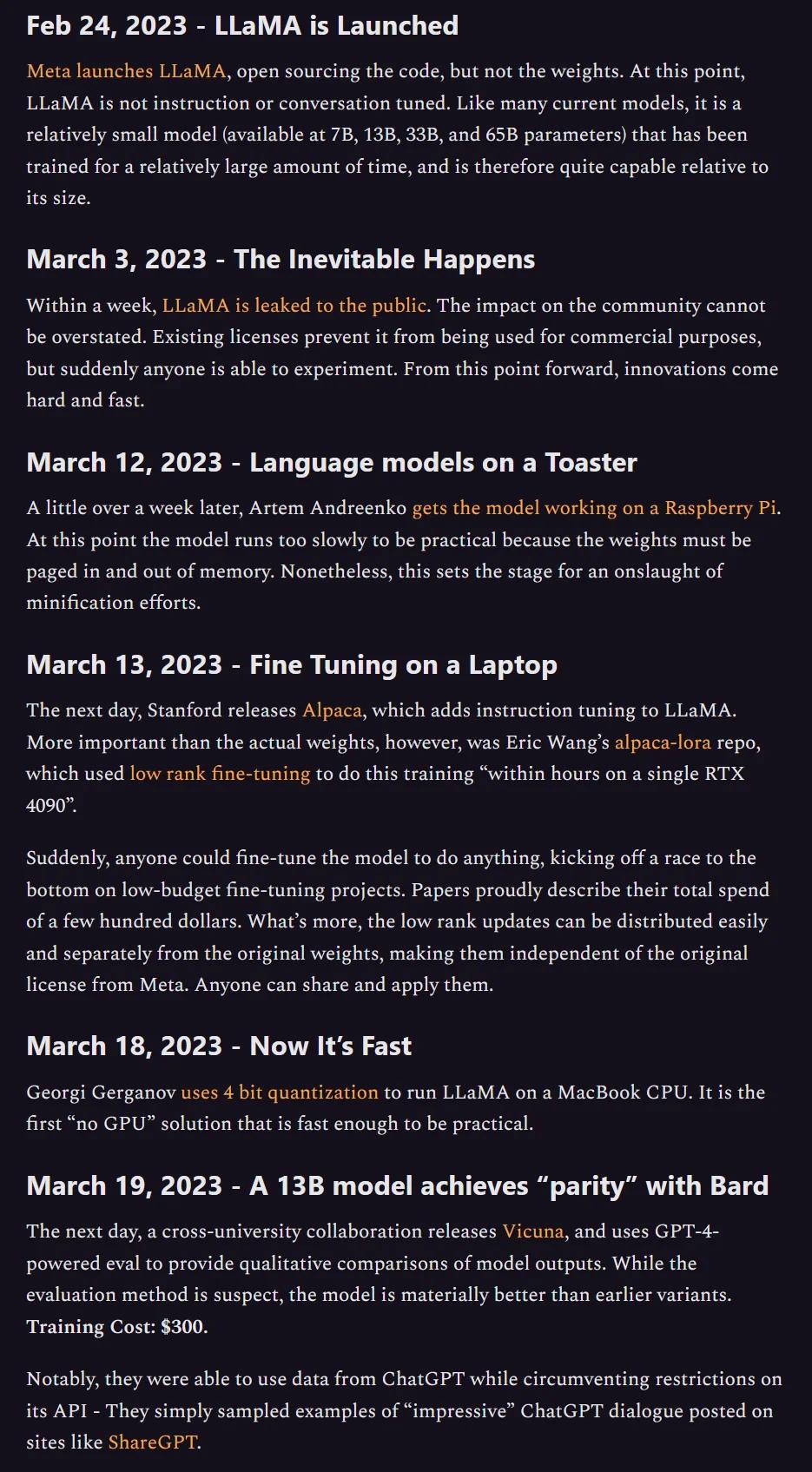
The memo’s core thesis - that neither Google nor OpenAI has a lasting moat against open-source - has proven remarkably prescient. This trend creates a real opportunity for anyone willing to run their own infrastructure.
Why Self-Hosting Matters
The case for self-hosted LLMs is not theoretical for me - I run them daily. Here is what makes it compelling:
| Advantage | Cloud ChatGPT | Self-Hosted |
|---|---|---|
| Data security | Data on third-party servers | Data never leaves your network |
| Customization | Limited to provider’s features | Full control over model, prompts, fine-tuning |
| Scalability | Determined by provider | Scale on your own terms |
| Cost model | Recurring subscription/API fees | One-time hardware + electricity |
| Availability | Dependent on provider uptime | You control uptime and maintenance |
| Privacy | Provider’s privacy policy applies | Your data, your rules |
The data security point deserves emphasis. With cloud-based ChatGPT, every conversation touches someone else’s infrastructure. For personal use, that may be acceptable. For anything involving proprietary business data, intellectual property, or sensitive personal information, it is a genuine risk that many people underestimate.
Real Use Cases
The generic “use AI for everything” advice is not helpful. Here are the use cases I have seen deliver real value - both on my homelab and in professional contexts:
For Individuals and Homelabbers
- Personal AI assistant - Automate daily tasks, manage schedules, draft communications. Running locally means your personal context stays private.
- Learning companion - Ask questions about complex topics, get explanations tailored to your level. No usage caps, no subscription fees.
- Creative collaborator - Generate character backstories, brainstorm ideas, or role-play scenarios with custom-configured characters and personalities.
For Organizations
- Technical support assistant - A 24/7 first-line responder for IT queries. Trained on internal documentation, it handles common questions and escalates edge cases. Self-hosted means your IT infrastructure details never leave the building.
- Knowledge management system - A centralized Q&A engine drawing from internal sources. Employees get instant answers to frequently asked questions without searching through wikis and Confluence pages.
- Business intelligence assistant - Real-time insights and trend analysis from company data sources. Leaders get actionable intelligence through natural language queries instead of waiting for analyst reports.
- Onboarding and training - An interactive assistant that guides new employees through processes, answers role-specific questions, and tracks learning progress.
flowchart TD
    A[Self-Hosted LLM] --> B[Personal Use]
    A --> C[Organization Use]
    B --> D[AI Assistant]
    B --> E[Learning Companion]
    B --> F[Creative Collaborator]
    C --> G[Tech Support]
    C --> H[Knowledge Management]
    C --> I[Business Intelligence]
    C --> J[Training & Onboarding]
What I Learned
Running open-source LLMs on my own hardware taught me several things:
- Quality is improving fast. The gap between open-source and proprietary models narrows with every release. What was 60% of ChatGPT quality six months ago is now 90%+.
- Hardware matters, but less than you think. A well-quantized 13B model runs comfortably on consumer hardware. You do not need a data centre.
- The real value is in customization. Fine-tuning, custom system prompts, and domain-specific knowledge bases transform a generic chatbot into something genuinely useful.
- Self-hosting is a mindset. It requires more effort upfront, but the long-term benefits in privacy, cost, and control are substantial.
What Is Next
The trend of open-source LLM development will not slow down. As models get smaller and more efficient, the hardware bar drops further. The question is not whether self-hosted AI will be viable for most organizations - it is when they will start taking it seriously.
For anyone running a homelab or managing infrastructure, I strongly recommend experimenting with self-hosted LLMs. The learning curve is manageable, the costs are predictable, and the capabilities are genuinely impressive.
Share :
You May Also Like

The Modern Leader
The False Dichotomy A bad manager sacrifices people for numbers. A good manager sacrifices numbers for people.
Read More